
Frontline Europe: Ukraine, Russia, and the Future of NATO — Conference Summary, April 22, 2026
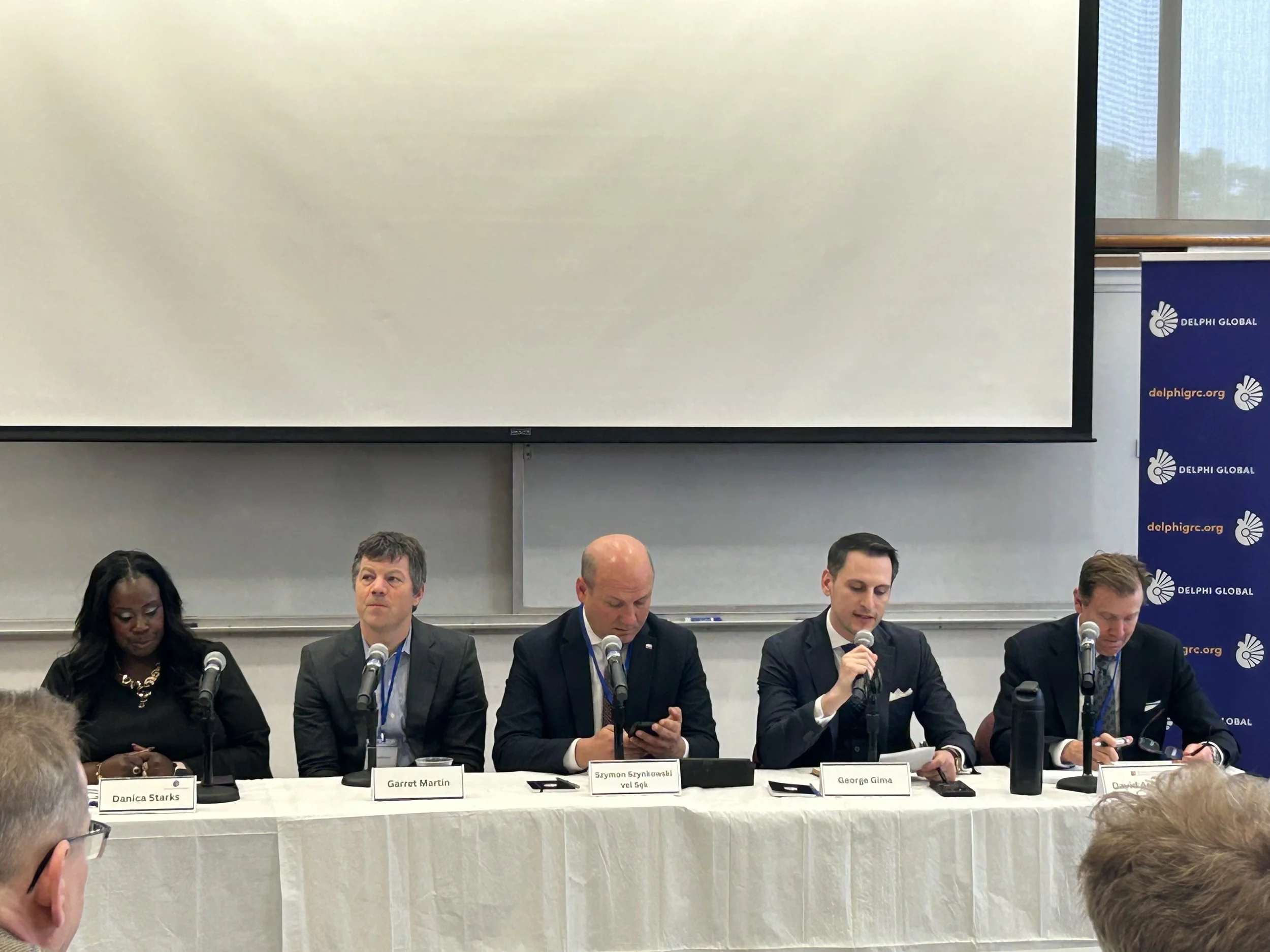
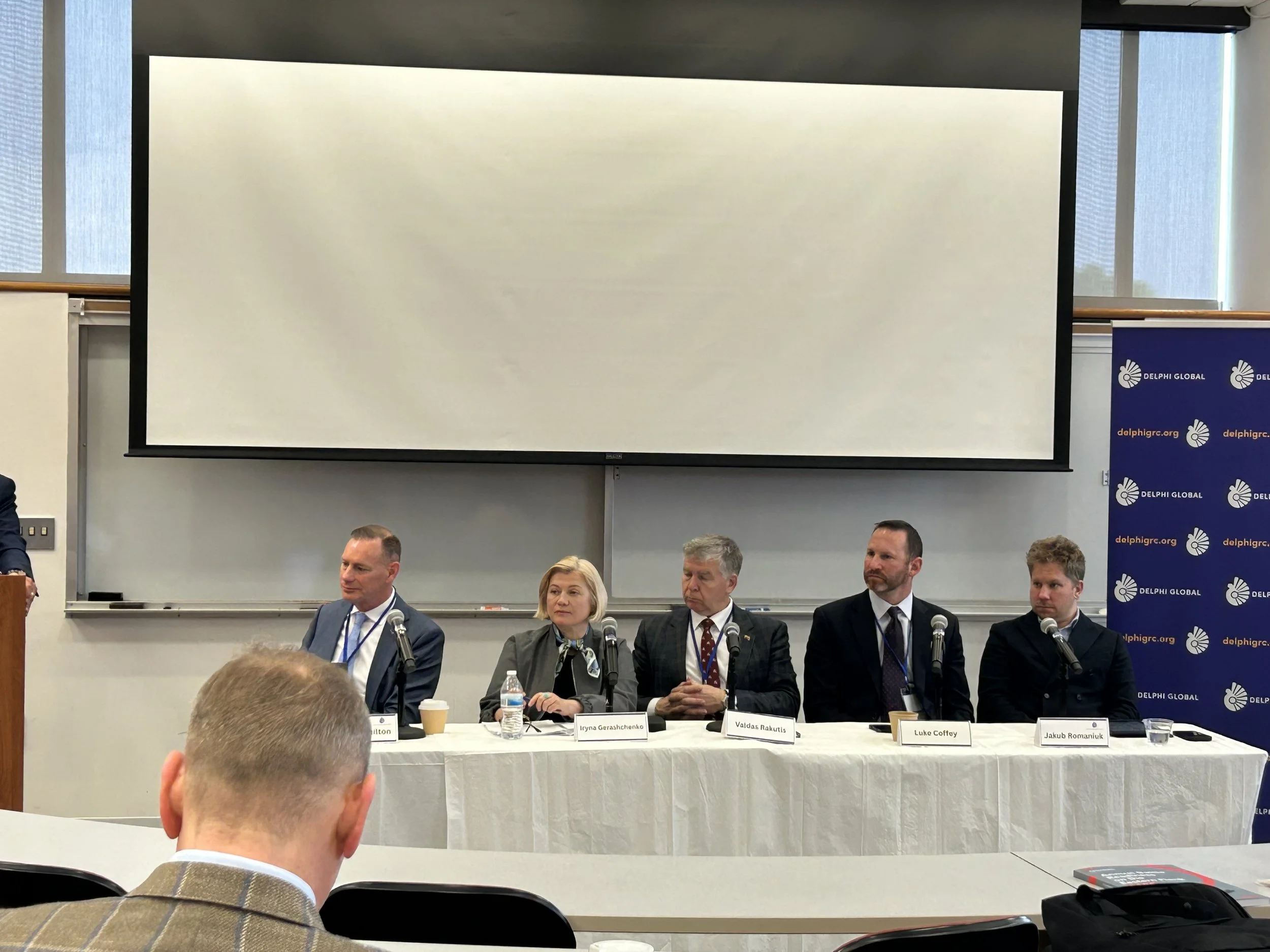
On April 22, 2026, the Center for Global Civic and Political Strategies attended the conference “Frontline Europe: Ukraine, Russia and the Future of NATO,” hosted at American University by the Delphi Global Research Center in partnership with the Foundation Institute for Eastern Studies and the School of International Service.
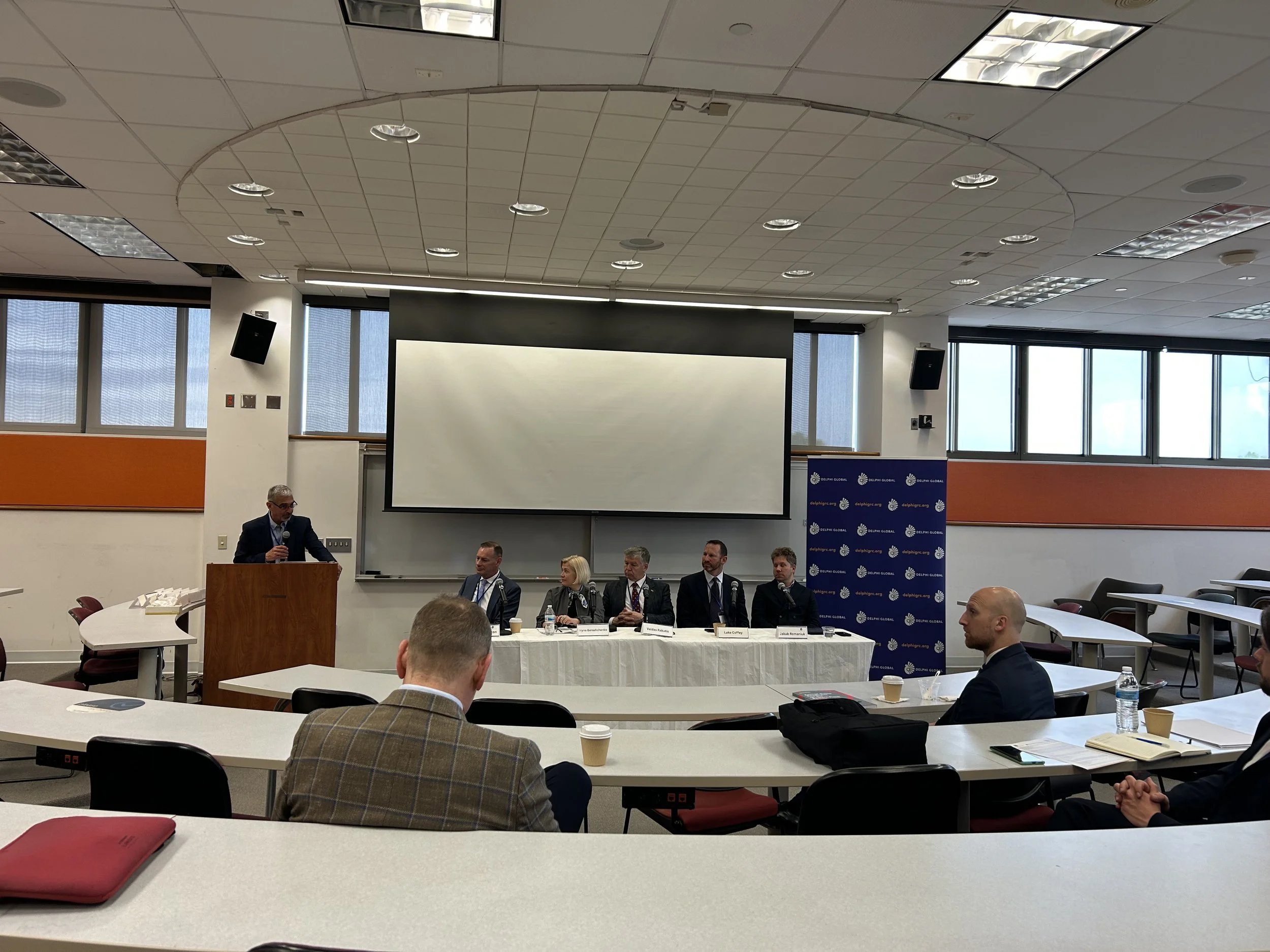
The day-long gathering brought together policymakers, military experts, and researchers to examine how the transatlantic alliance is adapting to Russia’s war against Ukraine and preparing for a more contested security environment.
Throughout the conference, speakers emphasized that the war in Ukraine has become the defining test of NATO’s credibility, unity, and industrial capacity. Panels explored battlefield realities, the prospects for diplomacy, and the long-term requirements for sustaining Western support to Kyiv. The discussion reflected a broad policy consensus that the conflict has evolved into a prolonged confrontation requiring durable military assistance, coordinated sanctions, and renewed alliance cohesion.
Participants repeatedly underscored the growing importance of the transatlantic defense industrial base. As the war stretches into its fifth year, policymakers are increasingly focused on scaling weapons production, reforming procurement, and strengthening supply chains to ensure that deterrence can be sustained over time. This shift mirrors wider policy debates highlighting that credible deterrence depends not only on strategy but on the ability to generate military capabilities at speed.
Speakers also addressed how U.S. global priorities—including competition with China, domestic political polarization, and defense budget pressures—are shaping Washington’s approach to Europe. Maintaining burden-sharing within NATO and preserving alliance unity emerged as central themes.
Another major focus was Russia’s expanding use of hybrid warfare, including cyber operations, influence campaigns, and economic pressure. Experts highlighted the need for stronger resilience across democratic societies, infrastructure, and public institutions.
During the conference, the Center for Global Civic and Political Strategies raised a question about the strategic approach toward Central Asia and the broader Eurasian region, particularly regarding countries that assist Russia in sanctions evasion and what incentives Western partners could offer in return for cooperation.
The discussion reflected an emerging recognition that the geopolitical consequences of the war extend far beyond Europe, reinforcing the need for a broader strategy that integrates sanctions enforcement, diplomatic engagement, and long-term regional partnerships.
The conference concluded with discussions on the future of NATO’s posture and the urgent task of rebuilding the alliance’s defense industrial capacity—widely seen as a cornerstone of deterrence in the coming decade.
