
Presentation at the Free Peoples of Russia House in Washington DC on March 27, 2026: Reviewing Russia’s Sanctions Evasion Findings 2025–2026
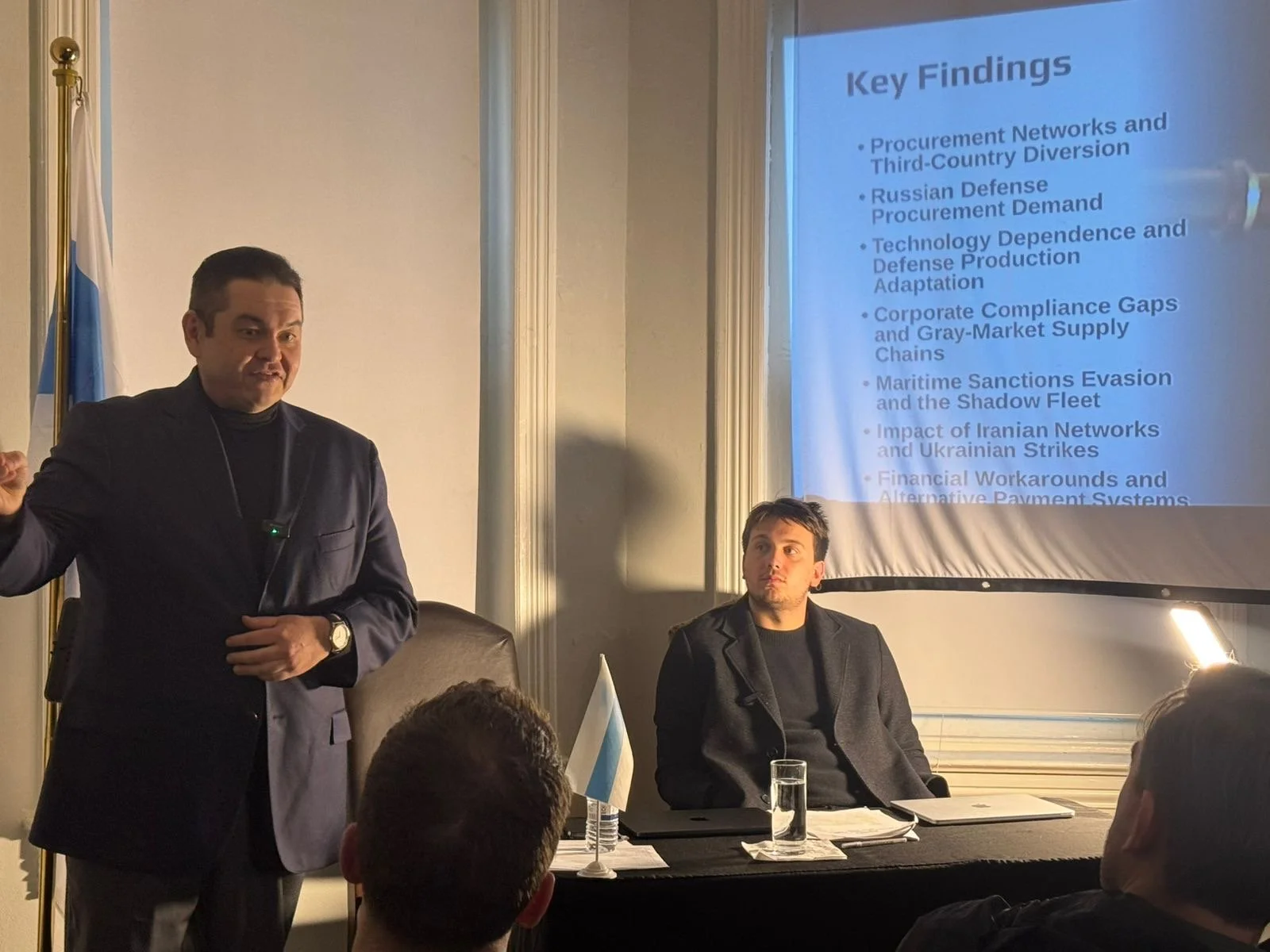
Presentation at the Free Peoples of Russia House
Reviewing the Sanctions Evasion Research 2025–2026
On March 27, 2026, Nurul Rakhimbek delivered a public briefing in Washington, DC, presenting key findings from the newly released Russia’s Sanctions Evasion Report 2025–2026. The event brought together policy professionals, researchers, journalists, and members of the international community for an in-depth discussion on how Russia continues to sustain its war economy despite unprecedented Western sanctions.
The event was publicly listed as “Russia’s Sanctions Evasion Architecture and the Future of Enforcement.”
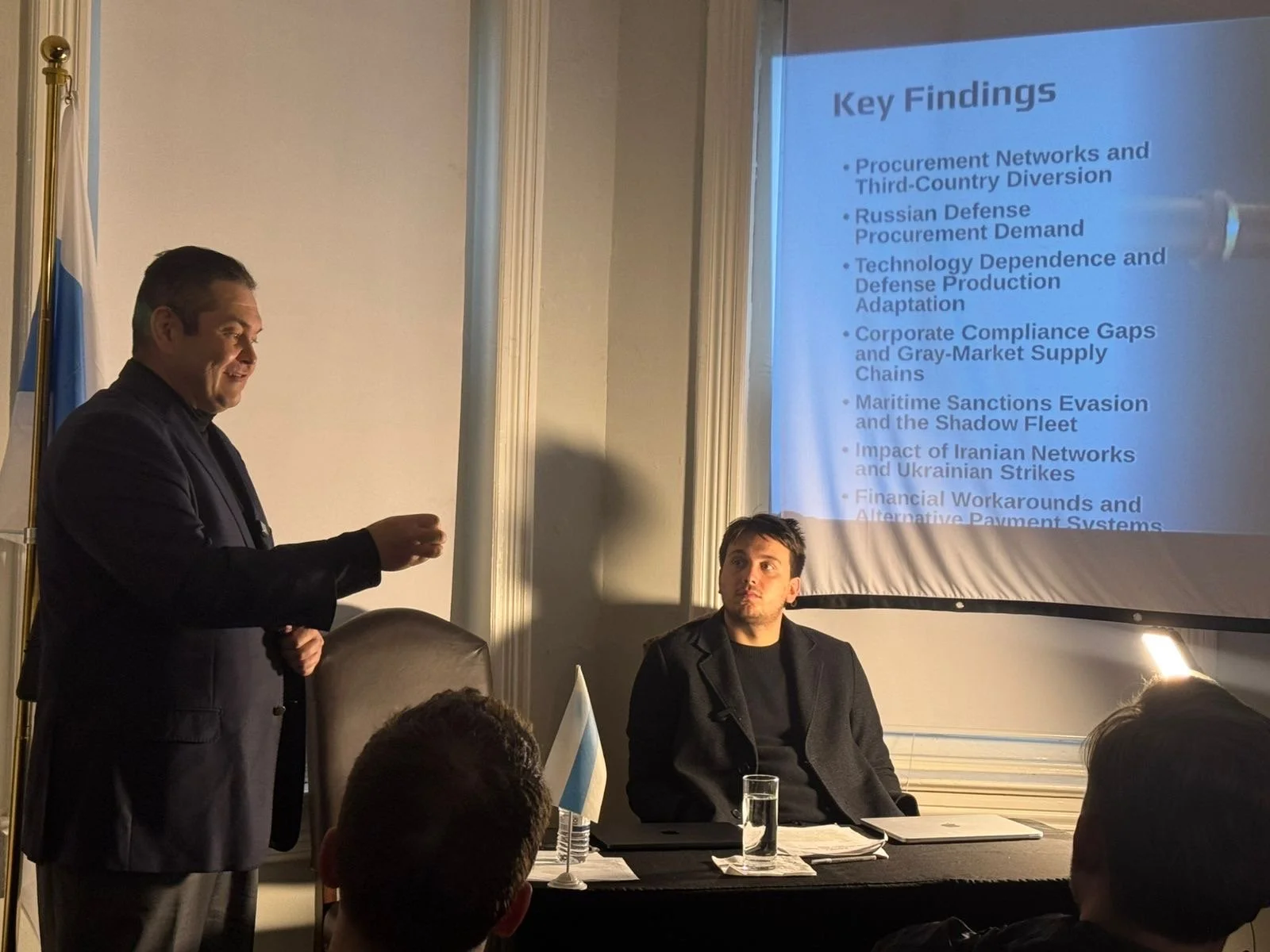
Key themes of the presentation
The discussion focused on how Russia has adapted to sanctions through an increasingly sophisticated network of transit states, financial intermediaries, and covert procurement channels. Drawing on new research and data analysis, the presentation examined:
Expanding dual-use trade routes across Central Asia, the Caucasus, Turkey, and China
The role of intermediary financial institutions and shadow payment systems
The growing use of digital currencies and complex cross-border payment schemes
The expanding ecosystem of third-country facilitators supplying Russia’s military-industrial complex
One of the headline findings presented was the identification of more than $1 billion in suspicious export-control activity in 2024, highlighting the scale of ongoing sanctions circumvention.
The briefing also connected these findings to broader global enforcement trends. Governments continue to target sanctions-evasion networks across multiple jurisdictions supplying technology and equipment to Russia’s defense sector.

Audience engagement and discussion
The event generated strong interest and lively discussion. Participants raised questions on:
The effectiveness of current enforcement mechanisms
Risks for third-country financial institutions and businesses
The evolving role of global supply chains in sanctions circumvention
Policy options to strengthen enforcement coordination among allies
The Q&A session highlighted the growing demand among policymakers and analysts for practical, actionable strategies to disrupt sanctions-evasion networks.

Key takeaways
The presentation concluded with a set of policy recommendations aimed at strengthening sanctions implementation, including:
Improving cross-border financial intelligence sharing
Expanding enforcement targeting of intermediary jurisdictions
Strengthening export-control compliance and monitoring
Closing regulatory gaps exploited by procurement networks
About the speaker

Nurul Rakhimbek is the Researcher at the Center for Global Civic and Political Strategies and a geopolitical analyst specializing in sanctions, energy security, and governance vulnerabilities across the globe.
